Top Benefits of Joining Basketball Club Teams in San Diego
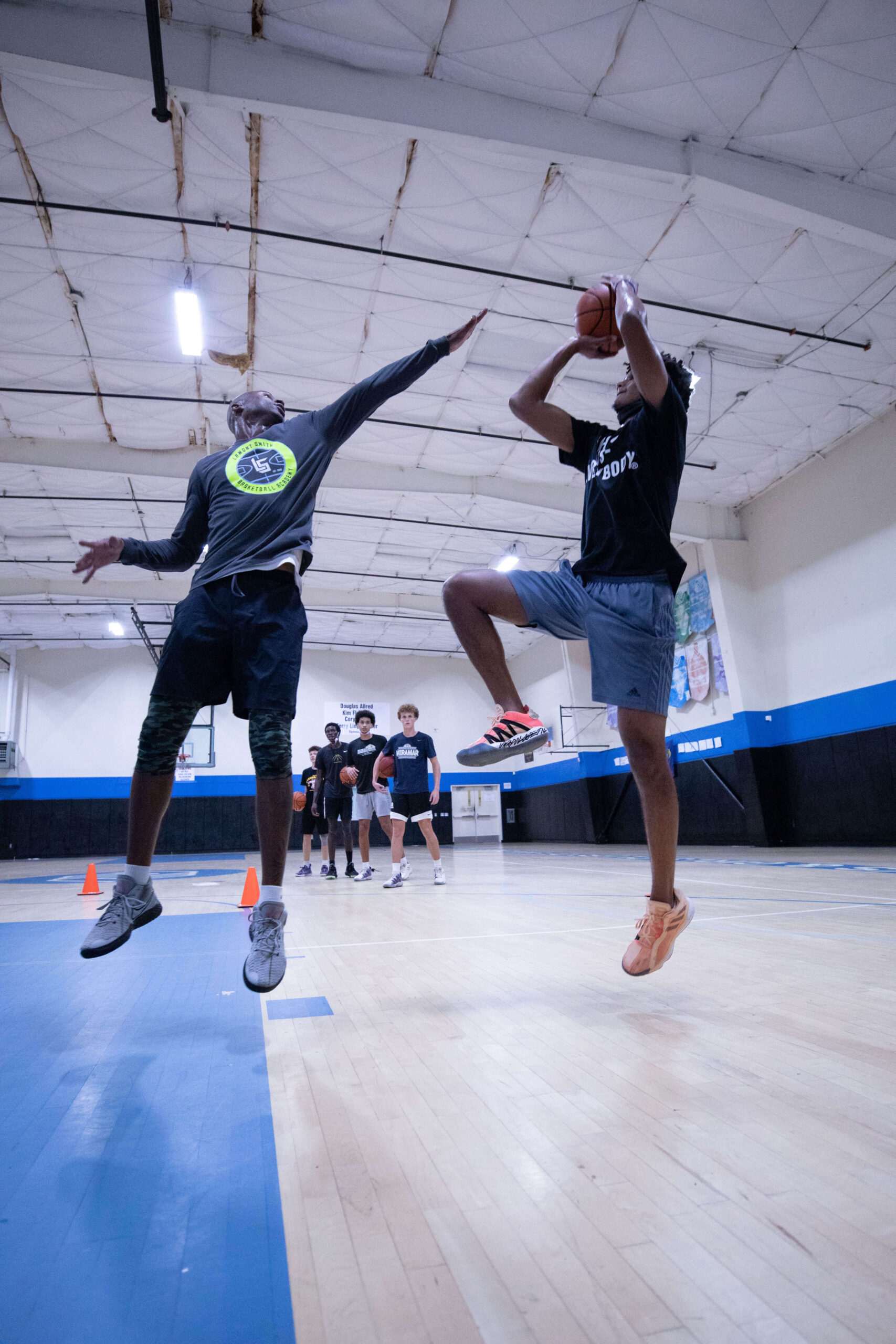


San Diego has never been a one-lane sports town. Surf, soccer, baseball, volleyball, and year-round outdoor training all compete for a young athlete’s time. Yet basketball holds a particular place here because the region gives players something many parts of the country cannot: consistent weather, a deep mix of school and club competition, and access to gyms, trainers, and tournaments almost every month of the year. For families trying to decide whether club basketball is worth the commitment, that local context matters.
Joining a club team is not just about playing more games. At its best, it gives a player a better practice environment, more deliberate coaching, and exposure to stronger competition than they may find in a single school season. It also asks for real sacrifices. Time, money, travel, and recovery all become part of the conversation. The value comes from understanding what a club program actually offers, and whether those benefits line up with a player’s goals, stage of development, and personality.
For many families considering Basketball Club Teams San Diego options, the smartest move is to look beyond the jersey and tournament schedule. The real advantages show up in habits, confidence, basketball IQ, and long-term opportunity.
The development curve gets steeper
A good club team compresses learning. Instead of waiting for a short school season to address weaknesses, players work on them through the year. That repeated exposure matters. A seventh grader who struggles to handle pressure, finish through contact, or rotate defensively might only see those situations in bursts during a standard season. In a club setting, those same issues come up in practices, weekend games, and tournament play often enough to become teachable patterns.
The jump many players make after one serious club season is not mysterious. They get more reps, but more importantly, they get better reps. There is a difference between dribbling through cones for ten minutes and spending a full practice reading help defense, attacking a closeout, or learning when to reject a screen. Club coaches who know their craft structure practice around decision-making, not just movement. That is usually where real growth happens.
In San Diego, where players often come from different school systems and neighborhoods, club rosters also create a wider training ecosystem. A player may practice against teammates with different strengths than they see at school. One teammate might be a pure shooter from the North County area, another a fast guard from the South Bay, another a physical wing from East County. That variety forces adjustment. Adjustment is a core skill in basketball, and it develops fastest when players face contrasting styles repeatedly.
Better competition changes everything
Talent rises in response to pressure. One of the biggest benefits of club basketball is that games tend to expose players more honestly than local recreational leagues do. A player who scores 20 points easily in one setting may discover that a club defender can take away their first move, sit on their dominant hand, and punish loose ball security. That can bruise the ego for a weekend. It can also accelerate improvement for the next six months.
This is especially true in a place like San Diego, where club teams often play both strong local opponents and teams from Orange County, Los Angeles, Inland Empire, Arizona, or Las Vegas, depending on the event schedule. The level of speed and physicality shifts quickly once travel tournaments enter the picture. Players who learn to perform against that caliber of competition usually return to school ball with more poise.
Parents sometimes worry when a player’s scoring average drops in club basketball. In many cases, that is not a bad sign. It often means the player is competing in a more demanding environment, one that forces them to expand their game. A young post player learns to guard in space. A ball-dominant guard learns to move without the ball. A shooter learns to defend well enough to stay on the floor. Those changes do not always show up neatly in a box score, but they matter far more than easy points against weaker teams.
Coaching tends to be more specialized
Not every club coach is excellent, and families should be selective. Still, one clear advantage of established club programs is the chance to work with coaches who spend a large portion of their time on player development. Many school coaches juggle teaching jobs, administrative duties, and short preseason windows. Club coaches, especially in well-run organizations, often have more room to focus on skill progression, film review, and role-specific feedback.
That kind of coaching can sharpen details that are often overlooked. Foot placement on a catch, timing on a weak-side stunt, the angle of a ball screen, the difference between a live dribble pickup and a jump stop, these are the margins that separate decent players from dependable ones. They are also the details that determine whether a player can contribute at higher levels.
In Basketball Club Teams San Diego families often find programs with coaches who have backgrounds in high school, college, or pro development. The quality varies, but the upside is real. A coach who understands recruiting, long-term athletic growth, and position-specific training can help a player avoid the common trap of mistaking activity for improvement. Plenty of athletes work hard. Fewer work hard on the right things.
A strong coach also brings emotional discipline. During tournament weekends, momentum changes fast. A player may struggle in the first game, sit with foul trouble in the second, then be asked to close the third. Coaches who can teach composure in those moments provide something far more durable than tactical advice. They help players regulate themselves under stress, which carries into school ball, academics, and life beyond sports.
Teammates often become a player’s standard
Young athletes are shaped by the people around them. A club roster can raise expectations simply by normalizing serious habits. When teammates show up early, stretch without being told, communicate on defense, and compete in drills instead of coasting through them, that culture spreads. Players who may have been among the strongest in a local setting suddenly have to match the urgency of a more committed group.
This peer effect is one of the least discussed benefits of club basketball and one of the most powerful. A motivated team can make discipline feel ordinary. Sleep, hydration, extra shots, and film review stop feeling like punishment and start looking like part of the craft.
I have seen average middle school players improve dramatically once they joined a team where effort was the baseline. Nothing magical happened. They simply adapted to the standard around them. Within a year, their defensive intensity improved, their body language got steadier, and their offensive choices became less rushed. The environment did the heavy lifting.
Of course, the opposite is also true. A poorly led team with selfish habits can reinforce bad basketball. That is why choosing the right club matters more than choosing the most recognizable logo.
Exposure to different roles helps players become more complete
School teams and club teams do not always ask a player to do the same job. That difference can be incredibly useful. A player who is the top scorer at school may need to become a defender and secondary ball handler on a club roster loaded with offensive talent. Another player who mostly rebounds and screens for their school team may get chances in club ball to attack from the elbow or initiate transition. Those role shifts can uncover parts of a game that would otherwise stay hidden.
For younger players, this broader exposure is especially valuable. Early specialization within a position can limit growth. Labeling a sixth grader as only a post player or only a spot-up shooter ignores how much bodies, confidence, and coordination change over time. Club settings often create more opportunities to experiment, provided the coach is willing to develop rather than just chase short-term wins.
This is one reason many trainers encourage players to use the club season to stretch their game. The results may be uneven at first, but the long-term payoff can be substantial. College coaches and advanced high school programs tend to favor players who can think the game, defend multiple actions, and adapt to different lineups. Club basketball gives them a chance to build those qualities in live settings.
The recruiting and visibility piece is real, but often misunderstood
Families often hear that club basketball is essential for exposure. There is truth in that, but it needs context. For athletes with legitimate college potential, club events can provide opportunities to be seen by coaches, especially in the high school years. Tournaments, showcases, and travel circuits create concentrated viewing environments that school games sometimes do not.
Still, visibility only matters if a player is ready for it. Playing in front of college coaches is not helpful if the athlete lacks game awareness, conditioning, or consistent effort. Exposure does not create ability. It reveals it.
For players in San Diego, club programs can be especially useful because they connect local talent to wider recruiting networks. A strong player at a smaller school might not get the same attention as someone at a high-profile program. Club basketball can help close that gap by placing athletes in larger events against known competition.
The most productive approach is usually practical rather than dreamy. Families should see club basketball as a platform, not a promise. The platform can help with:
- more games against respected competition
- access to events where evaluators are present
- relationships with coaches who understand the recruiting process
- film opportunities for skill breakdown and highlight creation
- clearer feedback on where a player currently stands
Those benefits are meaningful, but they work best when paired with honest assessment. A family that knows whether a player projects as varsity depth, all-league talent, college prospect, or late bloomer will make better decisions than one chasing hype.
Year-round structure can improve confidence
Confidence in basketball is often misread. It is not loudness. It is not heat-check shooting. Real confidence usually comes from familiarity. A player trusts themselves because they have rehearsed the action enough times to stay calm when it appears in a game.
Club basketball can build that trust through repetition across seasons. The athlete who struggled to trap on defense in January sees the same action in March, April, and May. The guard who once panicked against full-court pressure starts recognizing escape angles and passing windows by summer. Improvement becomes visible, and visible improvement strengthens confidence.
This matters in San Diego because the basketball calendar often stays active. Between practices, leagues, tournaments, and private training, players can maintain continuity instead of losing touch for months. Used well, that consistency helps athletes avoid the stop-start pattern that slows growth.
There is also a psychological benefit to belonging to a team outside the school environment. Some players blossom when they enter a new setting where they are not carrying old labels. The quiet kid becomes a vocal defender. The bench player becomes a key rotation piece. The athlete who felt overlooked on one team finds a coach who values their strengths. Those shifts can reset a player’s relationship with the game.
Physical gains usually follow, if the program respects recovery
Basketball club seasons can improve conditioning, movement quality, and general athletic readiness, but only if the workload is managed intelligently. More games alone do not guarantee better physical development. In fact, overuse is one of the clearest risks in youth basketball, particularly for players juggling school teams, club practices, skills sessions, and other sports.
The better clubs recognize this. They do not just chase volume. They monitor minutes, encourage rest, and communicate with families about soreness, minor injuries, and scheduling. This is where experienced coaching and sensible parenting matter.
When managed well, the physical upside is significant. Repeated game play improves stamina in ways straight conditioning sometimes cannot. Defending quick guards sharpens lateral movement. Rebounding in traffic builds toughness and timing. Competing against bigger or faster athletes teaches a player how to use angles, leverage, and pace rather than relying only on effort.
A useful sign of a healthy program is whether it talks about durability, not just intensity. Players need hard practices, but they also need room to absorb training. A twelve-year-old playing five games in a weekend every other week is not automatically on a better path than a peer practicing fewer hours with higher quality instruction and more sleep.
Club basketball teaches time management early
One overlooked benefit of joining a club team is that it forces families to organize life with more intention. Schoolwork, commute times, meals, sleep, family events, and travel all have to fit together. For some households, that challenge is the exact reason they hesitate. Fair enough. Club basketball does ask more of everyone.
But for athletes who are serious about improving, that structure can become an advantage. Players learn to finish homework before practice, pack gear the night before, eat with purpose on tournament days, and recover after long weekends rather than drifting through them. Those are adult habits disguised as sports habits.
High school athletes especially benefit from this. Once academics become more demanding, the ability to manage a busy schedule often separates the players who grow from the players who burn out. Basketball provides the pressure, but the lesson is much larger than the sport.
San Diego offers a unique basketball ecosystem
The location itself is part of the value. San Diego is large enough to support a range of clubs, but still connected enough that coaches, trainers, and school programs often overlap in useful ways. That can create a healthy development pipeline for families who do their homework.
The area also offers logistical advantages compared with colder regions. Travel is still part of club basketball, but local training is easier when weather rarely shuts things down. Outdoor courts remain usable year-round, skill sessions can be scheduled consistently, and players do not lose entire weeks to storms or gym closures as often as athletes elsewhere might.
Another local advantage is stylistic diversity. Because San Diego sits close to major basketball markets, teams regularly encounter different types of opponents. Some clubs play with pace and spacing, others lean on physical half-court defense, others pressure full court and rotate deep benches. Seeing all of that before high school varsity basketball can be a major asset.
For families exploring Basketball Club Teams San Diego programs, this means the market has real depth, but it also means fit matters. A powerhouse team is not automatically the best home for every player. Sometimes the better choice is a program with steadier minutes, stronger skill development, and a coach who communicates clearly.
The right team can sharpen character, not just talent
Sports talk can become overly sentimental, but there is a plain truth here. Competitive team https://remingtonaclw712.novacrestiq.com/posts/the-value-of-mentorship-in-basketball-club-teams-san-diego environments reveal character quickly. Missed shots, reduced minutes, turnover-filled halves, early morning games, and uncomfortable losses all test a player’s maturity. Club basketball creates many of those moments.
Handled well, they become growth points. A player learns how to support a teammate while frustrated with their own role. They learn to hear hard coaching without folding. They learn that effort has to remain visible when the ball is not going in. Those lessons stay with athletes much longer than any single tournament medal.
That does not mean every club experience is positive. Some teams overpromise. Some coaches confuse intimidation with leadership. Some parents bring stress that spills into the car ride home and drains the joy out of the sport. The developmental value depends heavily on the adults in the room.
Families evaluating options should pay attention to signals that reveal the team’s real culture:
- how coaches speak to players after mistakes
- whether bench players stay engaged during games
- how organized practices feel before the first tournament
- whether expectations around playing time are honest
- how the program handles losses and adversity
Those details tell you far more than social media graphics or trophy photos.
What families should weigh before committing
The benefits of club basketball are real, but they are not automatic. The strongest programs help players improve because they combine good coaching, strong peers, thoughtful competition, and a development plan that fits the athlete. The weaker ones often sell ambition without structure.
A family should start with a simple question: what does this player need right now? Not five years from now, not what another parent says, not what looks impressive online. What does this athlete actually need? More reps against stronger guards? Better footwork? More confidence? A more competitive practice setting? Honest feedback? Recruiting visibility? Those answers point toward the right level and type of team.
It is also worth asking whether the player truly wants the commitment. Club basketball tends to work best when the drive comes from the athlete, supported by the family, not the other way around. Motivation borrowed from a parent rarely lasts through a packed spring schedule.
San Diego offers enough variety that families can usually find a workable fit if they stay grounded. Some players need a high-exposure travel team. Others need a local club with excellent teaching and less strain. A middle school athlete may benefit most from skill-heavy instruction and moderate competition, while an older high school player may need tournament visibility and role clarity.
When the fit is right, club basketball can do more than improve a jump shot or tighten a handle. It can place a young athlete in an environment where standards rise, self-awareness deepens, and meaningful growth becomes hard to avoid. That is the real case for joining a club team, especially in a basketball city like San Diego where the opportunities are wide, but the best outcomes still belong to the families who choose carefully.
Lamont Smith Basketball Academy
888 Clairemont Mesa Blvd Suite T-2, San Diego, CA 92123
(619) 639-8778
FAQ About Basketball Club Teams San Diego
How can a player join an LSBA club team?
Players are evaluated during practices so the coaching staff can recommend an appropriate team and development level. Families should contact the academy to confirm current openings and evaluation details.
Are club teams available for newer basketball players?
Yes. LSBA describes multiple levels, including a developmental option for newer players as well as more competitive teams for athletes with prior club experience.
What do LSBA club team practices emphasize?
Practices emphasize basketball fundamentals, team defense, structure, communication, and player development. The specific focus may vary according to the team and experience level.
Do all LSBA teams travel?
Travel expectations vary by level. Some teams focus on local competition, while advanced teams may participate in tournaments elsewhere in Southern California or beyond. Families should confirm the current schedule before enrolling.